























:quality(85):upscale()/2026/10/14/001/n/1922564/314d528b6ad00a0b16f236.94960813_.png "19 Iconic Halloween Costumes to Inspire Your Plans – Starting at")

:quality(85):upscale()/2026/10/14/739/n/1922564/2321331c6acfb17488fb99.70103842_.jpg "Louvelle App Review With Photos")

















After “Avengers: Endgame” and “Spider-Man: Far From Home” completed Marvel Studios’ Infinity Saga in 2019, the next chapter of the Marvel Cinematic Universe officially kicked off in 2021 with the premiere of “WandaVision.” At the time, it wasn’t clear just how integral Wanda Maximoff and The Vision would be to the Multiverse Saga. But now, five years later, we have “VisionQuest,” the exciting conclusion to the story that carried us from the inaugural Marvel series on Disney+ to “Doctor Strange in the Multiverse of Madness” and “Agatha All Along.”
Since this is meant to be the final chapter of this tale of love, loss, and rebirth, many characters from around the MCU are returning for the series from “Star Trek: Picard” showrunner Terry Matalas. There are plenty more joining the shared universe in this show as well. So in an effort to get to know the key players and keep them all straight (since many of them reside in Vision’s head), we will break down the new and returning characters in this highly anticipated series from the House of Ideas.
Vision
At the dawn of the Marvel Cinematic Universe, Paul Bettany was tapped to lend his voice to Tony Stark’s personal AI assistant J.A.R.V.I.S. in “Iron Man.” This would continue across the franchise until the actor was required to use more than just his voice in 2015’s “Avengers: Age of Ultron.” In the follow-up to Earth’s Mightiest Heroes’ acclaimed first cinematic outing together in 2012, Bettany appeared as The Vision, a synthezoid superhero who was originally intended to be the unstoppable evolution for the evil robot Ultron. But thanks to the efforts of Stark, Dr. Bruce Banner, and the Mind Stone, Vision instead became a force for good.
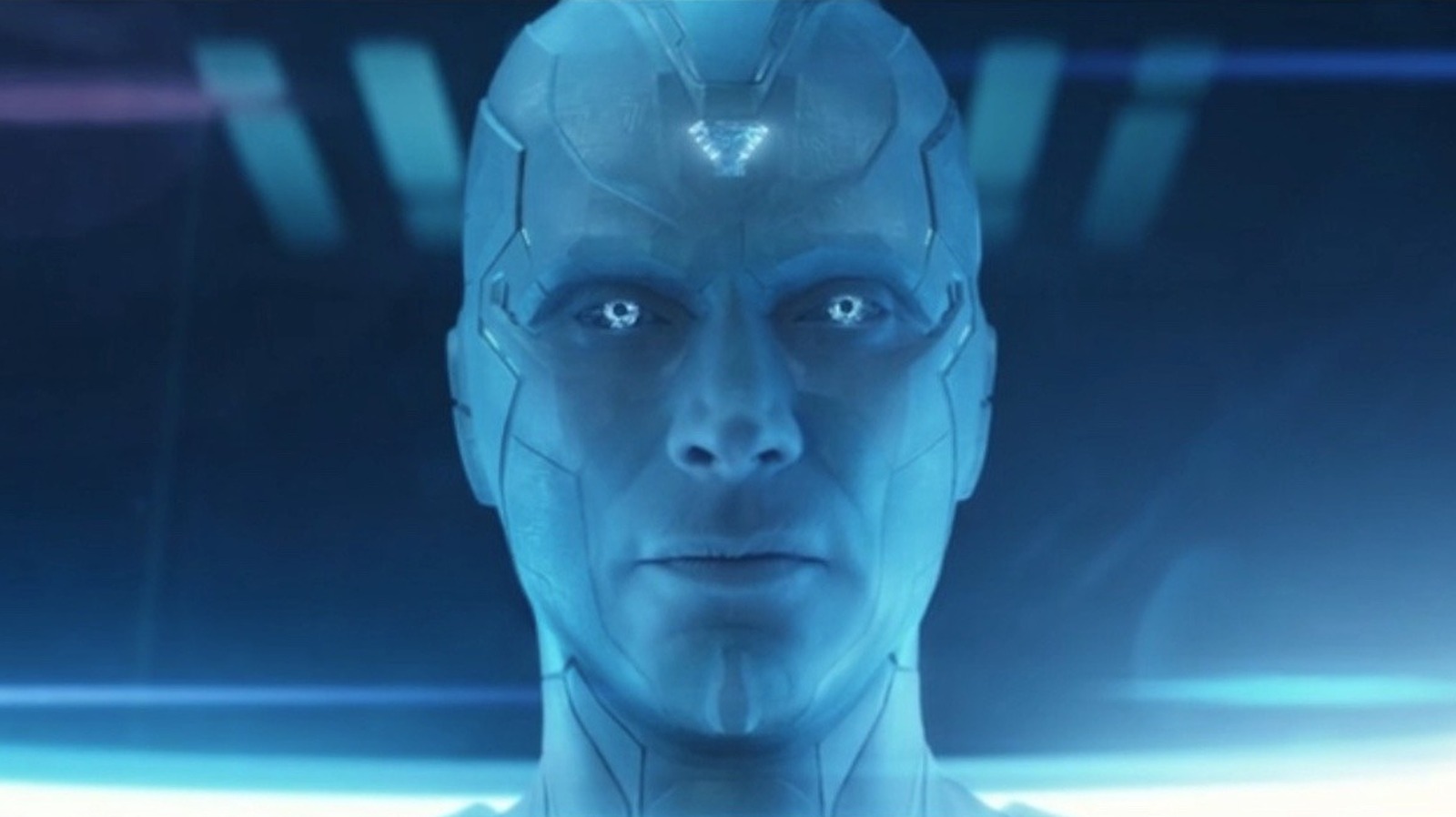
Unfortunately, the Avenging Android perished in the line of duty against Thanos during the Mad Titan’s quest to acquire the Infinity Stones. This loss particularly affected Wanda Maximoff, who had fallen in love with Vision during their time as Avengers. As seen in “WandaVision,” she would cope by altering reality within the Hex to create a new Vision. However, because S.W.O.R.D. wanted to reuse his body to create a weapon of their own, a separate all-white Vision was also created. When the two finally came to blows in Westview, New Jersey, the battle ended when the original Vision’s memories (or programming) were downloaded into the government-manipulated vessel to create a sort of Vision 3.0.
Before resurfacing at the beginning of “VisionQuest” at an old haunt of Wanda and Vision’s in Edinburgh, Scotland, this all-new Vision was seen fleeing the Hex in search of answers to determine who his true self is, with the help of some AI friends.
J.A.R.V.I.S.
As mentioned, J.A.R.V.I.S. (which stands for Just a Rather Very Intelligent System) was Tony Stark’s personal AI assistant during the first two phases of the MCU. During “Avengers: Age of Ultron,” he was attacked by the titular villain as he escaped the confines of Stark and Banner’s lab and into an Iron Legion sentry. Fortunately, the Science Bros were able to use the remaining fragments of J.A.R.V.I.S. code to create The Vision.
However, just like many of the other Stark Industries artificial intelligence programs, J.A.R.V.I.S. is based on a real person. In this case, he was named after Edwin Jarvis, the Stark family’s former butler and Howard Stark’s trusted ally. And rather than having Bettany pull double duty, “VisionQuest” smartly establishes that the various AIs that occupy space in Vision’s head are represented by human avatars. This allows the series to bring back James D’Arcy, who previously brought the human Jarvis to life in the beloved Marvel Television series “Agent Carter” and the hit film “Avengers: Endgame.” This time around, he is in charge of security, encryption, and housekeeping within his host’s systems.
F.R.I.D.A.Y.
Once J.A.R.V.I.S. was integrated into Vision in “Avengers: Age of Ultron,” it was F.R.I.D.A.Y.’s turn to step in as Iron Man’s new AI operating system. The new assistant’s name stands for Female Replacement Intelligent Digital Assistant Youth and is a play on the phrase “girl Friday,” which refers to an attentive helper.
Kerry Condon of “The Banshees of Inisherin” fame provided the voice for F.R.I.D.A.Y. in that film, as well in “Captain America: Civil War,” “Spider-Man: Homecoming,” “Avengers: Infinity War,” and “Avengers: Endgame.” However, rather than reprising the role and appearing onscreen as the AI’s human avatar, “Star Trek: Picard” and “Doctor Who” star Orla Brady takes on the part for “VisionQuest” instead. The character played by the Irish actor might have the most difficult job in Vision’s “household” since she handles tactical ops, socialization, and humor, the latter two being areas where White Vision greatly differs from his original recipe.
E.D.I.T.H.
Designed to be used after the death of Tony Stark in “Avengers: Endgame,” the sunglasses containing the operating system E.D.I.T.H. (short for Even Dead, I’m the Hero) are given to Peter Parker in “Spider-Man: Far From Home” to aid him on his crime-fighting and web-slinging journey. However, the young wall-crawler falls victim to Quentin Beck’s charms and gives him the AI-infused glasses, along with control of the fully loaded Stark Industry satellite systems. This gives the deceptive Mysterio access to state-of-the-art tactical drones equipped with more than enough firepower to take out Spidey. While Parker eventually defeats Beck and regains control of the glasses, the hero relinquishes them to the Department of Damage Control. While E.D.I.T.H. was listed as offline and stored at a DODC facility as evidence, the organization has utilized the drones for their own operations, as seen in “Ms. Marvel” and “Doctor Strange in the Multiverse of Madness.”
Dawn Michelle King provides the voice for E.D.I.T.H. in “Spider-Man: Far From Home.” She can also be heard with the help of archived audio in “Spider-Man: No Way Home.” However, rather than an actor or a voice performer, King’s primary job at Marvel Studios was first assistant editor on “Iron Man,” “Thor: The Dark World,” “Ant-Man,” and the first two MCU Spider-Man films, among other non-Marvel projects. Since she wasn’t likely to reprise the role, “VisionQuest” brought in “Schitt’s Creek” and “Heated Rivalry” Season 2 star Emily Hampshire to play the human avatar of E.D.I.T.H., who handles game theory, weapons, and recreation for Vision. In other words, she’s the fun one.
DUM-E and U
Long before we saw what Tony Stark could do in a cave with a box of scraps, the prodigy was already building robots in an MIT basement at the age of 16. DUM-E and U were the fruits of his labor. Rudimentary compared to the Iron Man suits he would become known for later in life, these two hydraulic arms helped their creator with various tasks around his workshop. When we first meet them in “Iron Man,” DUM-E is tasked with putting out fires during the creation of the Iron Man Mark II armor while U records the trials. Despite continuing to get annoyed by DUM-E through “Iron Man 2” and “Iron Man 3,” Stark holds a special place for the pair in his heart — so much so that he returns to the ruins of his Malibu home after The Mandarin’s attack to recover the remains of these robots and rebuilds them by their next MCU appearance in “Spider-Man: Homecoming.”
In “VisionQuest,” DUM-E and U serve a similar purpose for Vision as they did for Iron Man. They both handle general maintenance while DUM-E specializes in fire suppression and U tackles defragging and video analysis. Their human avatars are played by Henry Lewis and Jonathan Sayer, who are frequent collaborators onstage and onscreen. They are probably best known for their work on “The Goes Wrong Show,” a comedy that aired on BBC from 2019 to 2021 about a theater company whose productions are constantly plagued by problems.
Ultron
One of the more prominent themes in “VisionQuest” is family, specifically fathers and sons. Though Vision may not have been born in a traditional fashion, he was created by Ultron. So it’s not that surprising that Vision still carries around a piece of “his dad” with him. But as the events of the new series unfold, even though he wants to trust Ultron and hopes he’s somehow changed over time, the son learns the hard way that a leopard can’t change its spots.
The mechanical menace first appeared in the Marvel Cinematic Universe as the titular antagonist of “Avengers: Age of Ultron” in 2015, created by Tony Stark and Bruce Banner as a way to put a “suit of armor around the world” to protect it. Unfortunately, after absorbing the history of mankind, Ultron determined that the best way to save Earth is to eliminate its inhabitants in favor of artificial beings. The murderous machine and his robot army are ultimately defeated by the Avengers (with the final blow delivered by Vision himself), but not without suffering extensive damage to the nation of Sokovia and the public’s perception of their superpowered protectors.
Ten years after his initial performance on the big screen, James Spader returns to the MCU to reprise the role of Ultron for the Disney+ streaming series as both the voice of the evil AI with a god complex and the bearded face of his human avatar. No stranger to the realm of television thanks to his memorable roles as Alan Shore in “The Practice” and “Boston Legal,” Robert California in “The Office,” and Raymond Reddington in “The Blacklist,” the prolific actor delivers yet another commanding performance as the calm, calculated, and callous adversary for The Vision in Marvel Television’s latest production.
Paladin
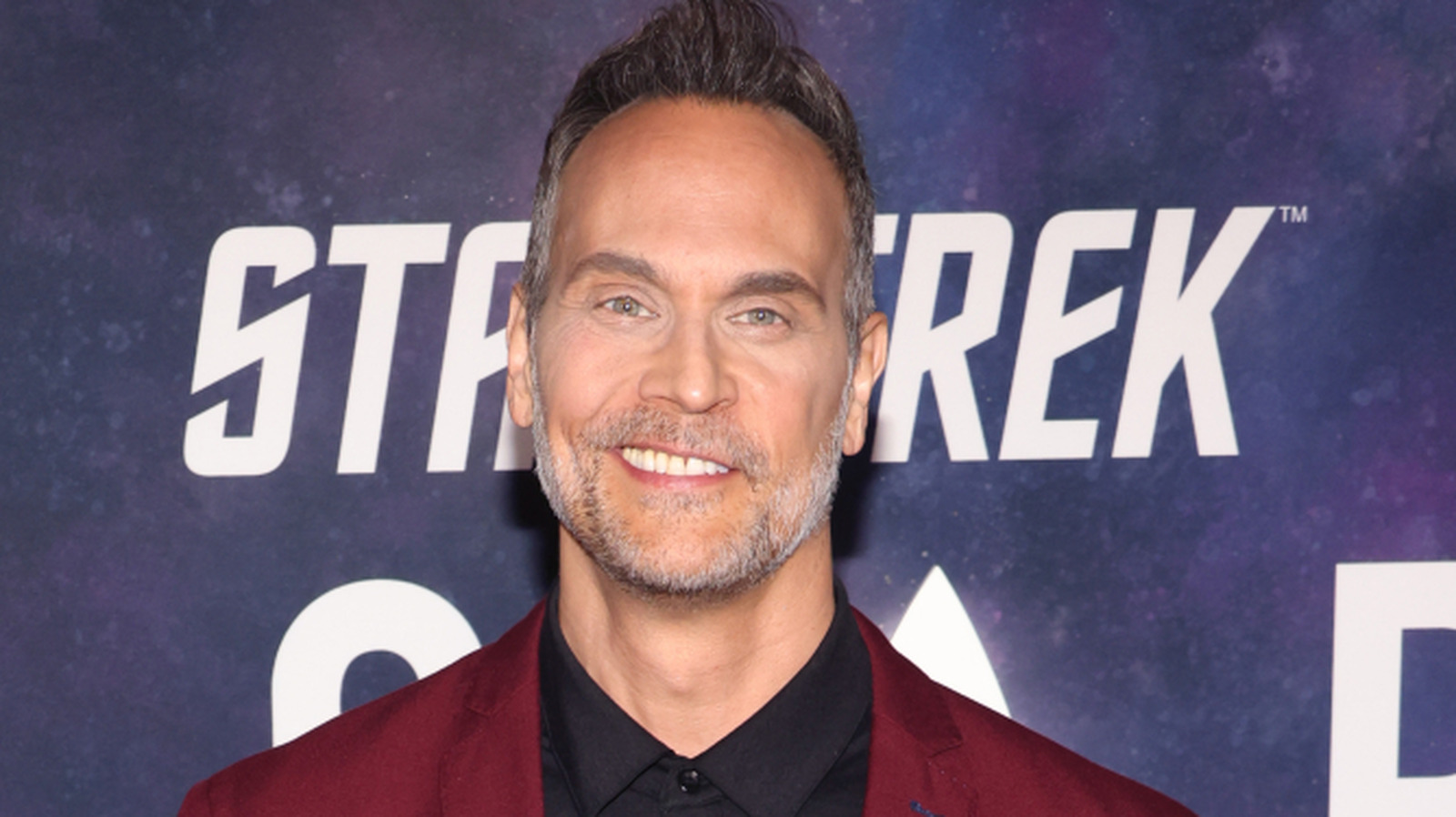
The first new addition to the MCU lore courtesy of “VisionQuest” is the bounty hunter known as Paladin — played by Todd Stashwick, who previously worked with showrunner Terry Matalas on “12 Monkeys” and “Star Trek: Picard.” The morally ambiguous character has been hired to capture Vision on behalf of an unknown client. The skilled mercenary and his team tracks his target to the Edinburgh pub where he’s been hiding out for years after the events of “WandaVision.” But when the synthezoid escapes, Paladin sets his sights on someone with a deep connection to the Android Avenger. More on that later, though.
While we don’t know much about this live-action Paladin, his comic book counterpart has a storied history at Marvel. The character was created by writer Jim Shooter and artist Carmine Infantino for “Daredevil” #150 in 1978. He’s not a supervillain per se, but his line of work often leads him to be at odds with superheroes like Punisher, Misty Knight, and Shang-Chi. However, he will occasionally find himself aligned heroes as well, particularly during his time with teams such as The Defenders and Heroes for Hire. That said, he has also been aligned with Norman Osborn’s Thunderbolts and the Serpent Society when the price was right.
It’s currently unclear which side Stashwick’s version of the character will land on when the credits roll on the “VisionQuest” finale, but it’ll certainly be an explosive ride as we find out alongside Vision and his family.
Jocasta
The other mysterious new addition to the Marvel Cinematic Universe by way of “VisionQuest” is Jocasta, a powerful android who finds herself at odds with Vision as she seeks revenge. Though she doesn’t appear in the first two episodes, the character will be played by T’Nia Miller, who is best known for appearing in filmmaker Mike Flanagan’s “The Haunting of Bly Manor” and “The Fall of the House of Usher” on Netflix.
In the pages of Marvel Comics, Jocasta was created by Jim Shooter and George Pérez for “The Avengers” #162 in 1977. She was built by Ultron as his bride and used the brainwaves of Janet Van Dyne, aka The Wasp, aka the wife of his creator, Hank Pym, to bring her to life. But basically every step of the way, Jocasta resisted her programming and found a way to oppose Ultron by siding with the Avengers. There was also a time when she developed feelings for Vision due to their similar experiences, but he never reciprocated those feelings and stayed with The Scarlet Witch.
While the character has not appeared in any MCU show or movie before, the name “Jocasta” has. As Tony Stark is deciding which AI assistant to upload to his systems after the transformation of J.A.R.V.I.S. to The Vision in “Avengers: Age of Ultron,” he pulls up a number of computer chips with different AI programs on them. In addition to F.R.I.D.A.Y., Jocasta is among his choices. It’s not clear if this Easter egg will come into play during this series, but it would be cool if the dots connected.
Thomas Shepherd
The final character on our list is somehow both new and returning to the MCU. Following the events of “WandaVision” and “Agatha All Along,” Scarlet Witch and Vision’s son Billy Maximoff is reincarnated into the body of a dying William Kaplan after the Westview anomaly dissolves. After walking the Witches’ Road with Agatha Harkness, he finds a recently drowned Thomas Shepherd for the soul of his speedster twin brother, Tommy, to inhabit. Fast forward down the Sacred Timeline, and we finally learn what happened to Thomas/Tommy.
Played by Ruaridh Mollica, teenage orphan Thomas is surviving in London by grifting and picking pockets with his friend Lisa Molinari (Lauren Morais). At the same time, he is suffering from an identity crisis because he is remembering the lives of both Thomas Shepherd and Tommy Maximoff at the same time. Meanwhile, when he learns of Thomas’ existence and struggles, Vision is having a hard time believing that this young man is actually his reincarnated son. Despite his doubts, they connect and accept that they are each other’s something.
While it remains to be seen whether Wanda and Vision’s twin boys will be reunited in the MCU, Speed and Wiccan’s reunion plays a big part in the Young Avengers’ history in the pages of Marvel Comics. Then, as seen in “Avengers: The Children’s Crusade,” written by Allan Heinberg and illustrated by Jim Cheung, the twins seek out their grandfather Magneto to help them and their team find The Scarlet Witch. With the Multiverse Saga coming to an end and the Mutant Saga on the horizon, could this storyline factor into the future of Marvel’s film and television projects? Again, time will tell. Until then, True Believers are along for the journey with “VisionQuest.”