






















.jpg "The War on Drugs’ Robbie Bennett Sets Two New Solo Albums")






















Arguably the best thing about animation, at least on the creative side, is that if an idea can be thought, it can be drawn — and it takes no more budget to draw outer space than it does a suburb. There are no location fees when the location is ultimately the same: a computer screen, a blank page, or transparent cel. Perhaps, then, it’s surprising we haven’t had more sci-fi cartoons. The sky — and beyond! — is the limit when it comes to alien worlds and the universe.
Genre fusion can also be unlimited — when it comes to the best sci-fi cartoons on TV, they include sitcoms, fantasies, creative toy commercials, imaginative repurposings, and even a talk show. The only rule for inclusion here is that they be predominantly sci-fi in setting — no fantasy hybrids like “ThunderCats,” or superheroes with only incidental sci-fi elements like “Batman.” Let’s dive into the best.
15. C.O.P.S.
“C.O.P.S. Central organization of police specialists. Fighting crime in a future time.” Thus began every episode of the cartoon — a surprisingly enjoyable tie-in to a short-lived toy line in which every action figure had a cap-firing weapon.
Mixing genres and cinematic influences, “C.O.P.S.” is essentially Black Robocop versus Edward G. Robinson, with all their allies basically being wacky cyborgs too. “Robocop” had its own cap-firing toy line and PG cartoon as well, but it was stuck being a lackluster adaptation, while “C.O.P.S.” could get colorful with characters who had names like Buttons McBoomBoom and Dr. Badvibes. It’s arguably more in the spirit of Paul Verhoeven, satirizing typical good vs. evil copaganda cartoons by being an over-the-top version of one. Other elements of social satire include budget cuts leading to the creation of more criminals, and an anti-drug episode in which the crooks team with the cops because drug dealers are interfering with their theft operations.
14. Star Wars Rebels
Star Wars has had many animated spin-offs, and everyone has a favorite, but “Rebels” arguably remains the one with the best arc, and the most influence on subsequent live-action productions (“Ahsoka” is pretty much a direct sequel). It begins with the Aladdin-like Ezra Bridger, a kid deftly dodging Imperial security, hooking up with a crew of rogue rebels led by ex-Jedi Kanan Jarrus.
Initially, it plays like a fun romp, with the crew of the Ghost starship outwitting incompetent stormtroopers like a space Bandit against the Empire’s Smokey. Gradually, though, the story gets darker, as Darth Vader and former Sith Maul show up, Grand Admiral Thrawn takes charge of the Imperial fleet, and the rebels’ escapes get less and less easy. It culminates in a major character’s death, and two other significant characters disappearing.
“Rebels” also benefits from better voice casting than usual — Freddie Prinze Jr. really found his calling in the kind of serious role he never would have gotten in live-action.
13. Solar Opposites
In live-action, most shows about aliens are about them hiding, or at least being secretive. In the animated “Solar Opposites,” a family of aliens from the planet Shlorp just lands in a suburb and remains openly alien. After years of shows that treat alien hatred as a metaphor for bigotry, it’s unusual to see one that’s about the conflicts derived from being, effectively, out and proud. That the family is headed by a same-sex male couple only drives that theme home.
“Rick and Morty” writers Justin Roiland and Mike McMahan had the mindset for this kind of sci-fi humor, and even after Roiland was fired over domestic abuse charges, its quality continued. Elaborately conceived alien backstories are balanced with culture-clash satire, and the show grew in scope with ever-expansive subplots: one about miniaturized human prisoners who start their own micro-society in a terrarium, and another about corrupt space cops.
12. Batman Beyond
Superheroes are rarely allowed to get old, except in Elseworlds and non-canon stories. “Batman Beyond” breaks the mold; it’s a direct sequel to “Batman: The Animated Series,” with a retired Bruce Wayne in a futuristic city. Teenager Terry McGinnis becomes the new Batman, mentored by the old, in a world of flying cars and robots.
Older Bruce tales typically make him angrier and more brutal (think Frank Miller or Zack Snyder), but Bruce Timm, Alan Burnett, and Paul Dini took the harder yet truer path. A man as committed and disciplined as Batman would stay good — and his protege gets to face an entirely new roster of villains, like the radioactive Blight, shape-shifting Inque, and sonic attacker Shriek. In his battles against them, the young Batman gets a new suit that can fly, hide from radar, and generally do much more tech stuff than the old utility belt. It’s a creative invigoration, with all the top-quality writing of the original “Batman” in a sci-fi setting that had never been defined before.
The show was popular enough that Terry McGinnis was incorporated into DC continuity, and there have been several attempts to make a live-action movie, but they all seemed to falter due to film studios not having the guts to do what the cartoon already did: imagine a future where Bruce Wayne ages out of the cape.
11. Space Ghost Coast to Coast
In 1966, Hanna-Barbera tried to cash in on the popularity of superheroes by creating Space Ghost. He lasted a mere 20 episodes. In 1994, he was resurrected and repurposed, ironically, as a clueless outer space-based talk show host. “Space Ghost Coast to Coast” ran 109 episodes, and gave birth to Adult Swim from Cartoon Network. It was the pioneer of the postmodern, surreal non-sequitur pop-culture humor that would not just dominate the decade, but beget an entire sensibility in animation. More than one show on this list may owe its existence to the creative reboot.
The show features creatively edited interviews with actual celebrities, from the currently hip (Michael Stipe) to the campily cool (Adam West). Space Ghost is portrayed as a kind of deranged David Letterman, who forces his old alien foes to work on the show and delights in blasting them with lasers. Similar to the real Letterman a decade prior, it signaled a new generational sensibility, taking an older format and smashing its rules with glee.
10. Teenage Mutant Ninja Turtles
Though their cartoon is set in the present day, the muscular, weapon-slinging heroes in a half shell are the product of alien-made, genetic-altering ooze, so that definitely counts as science fiction. The original Fred Wolf Films cartoon began in 1987, but it came to define the ’90s, an era of independent superheroes and ironic humor. The name alone, “Teenage Mutant Ninja Turtles,” has a “so bad it’s good” ring to it; the enemy Foot Clan are a parody of Marvel’s The Hand.
Little kids think the skateboarding, pizza-chowing turtles are cool; older teens studying world history in high school catch the references in the names Leonardo, Michelangelo, Donatello, and Raphael while enjoying the entertaining characters and puns. The tie-in toys had a wild, anything-goes aesthetic, and the theme song is still an earworm. Subsequent cartoons, movies, and comics have made a multiverse of turtles, and now everyone has a favorite. A comic may have started it all, but that first cartoon, which kids could grasp and older viewers could laugh with, made action-comedy icons out of a gloriously goofy concept, and they’ve never so much as taken an extended hiatus from pop culture since.
9. Cowboy Bebop
Originally conceived by Bandai as a cartoon to sell toy spaceships, “Cowboy Bebop” lost their support as soon as they saw what creator Shinichiro Watanabe actually had in mind. Their sister company Bandai Visual stepped in, saving what has become one of the most distinctive sci-fi animated shows ever: a jazz-infused, neo-noir space western.
Stylish former hitman Spike, burly ex-cop Jet, sexy hustler Faye, hyperactive teen Edward, and Ein the dog make for an amusingly, complementary mismatched team of bounty hunters, as they also evade Spike’s former partner, the aptly named Vicious. The fivesome predate the movie version of “Guardians of the Galaxy,” but it’s a similar dynamic, alternately super-cool and mega-awkward. Individually, the characters have such distinct looks and personalities that they’ve inspired many fan cosplays.
Debuting in 1998, “Cowboy Bebop” made the contemporaneous revived swing-culture cool and new by putting it in a space setting, and it spawned a movie at the time. Over two decades later, Netflix tried to remake it in live-action — and the still-passionate fan base mostly rejected it, as did original creator Watanabe.
8. The Transformers
Unlike many toy lines with a good and evil theme, Hasbro’s Transformers toys were initially repacks of two entirely different Japanese robot lines: Micro Change and Diaclone. To sell them in the United States, a new storyline was needed, making the cartoon extra important in dividing the characters into heroic Autobots and evil Decepticons.
Despite an absolute banger of a theme song, the cartoon might have faded into obscurity alongside the likes of “Jayce and the Wheeled Warriors” if not for one thing: the absolutely perfect casting of the late great Peter Cullen as Autobots leader Optimus Prime. Voice actors in ’80s action cartoons were often over the top, or prone to using fake accents to disguise multiple roles. Cullen, however, took the part seriously, basing his voice on his Vietnam veteran older brother, who was his personal hero. His vocal chords made the truck robot a beloved pop culture icon.
Even Hasbro, which sold millions of Optimus toys, underrated his popularity. When they killed him off in the 1986 spinoff movie, fans were furious, and the character was subsequently revived. Cullen even continued to play Optimus in the live-action movies, in an acknowledgement that no A-lister could likely improve upon his work.
7. Robotech
It’s a miracle “Robotech” makes any sense at all, given that it’s a redubbed, American mashup of three different Japanese cartoons: “Super Dimension Fortress Macross,” “Super Dimension Cavalry Southern Cross,” and “Genesis Climber MOSPEADA.”
“Macross,” with its distinctive transforming robot planes, was the most memorable and merchandisable part, However, the storyline that turned all three shows into three different alien invasion wars across three generations created a kind of epic serialization not previously seen in American action cartoon shows. This was groundbreaking and mindblowing to ’80s kids. Other animated shows in 1985 tended to maintain a status quo balance between heroes and villains; “Robotech,” while Americanized, features characters who evolve and the passage of time across years. It got confusing for kids who wanted to collect the toys, but led many to seek out more anime as they got older.
Licensing rights to “Robotech,” including uncut copies of the original episodes, have become a legal nightmare over the years, but what fans remember seeing at formative ages may be better than the real thing anyway.
6. Aeon Flux
Peter Chung’s original “Aeon Flux” animated shorts on MTV’s Liquid Television play around with nonverbal storytelling and shifting audience sympathies in a science fiction setting. When he concluded the initial batch with the main character’s death, and MTV wanted more, he decided to kill her off repeatedly in every subsequent short, years before Kenny on “South Park.” Then they asked for a full half-hour series.
That version of “Aeon Flux” ran for 10 episodes, delivering one of the most gloriously perverse, bizarre, nonlinear sci-fi cartoons ever. Aeon could and did die again; each episode is effectively a standalone, but always involves a future war between the fascist Bregna and the libertine Monica. Bregna’s leader, Trevor Goodchild, is both lover and arch-enemy to Aeon, a Monican saboteur in bondage-style gear. Cronenbergian levels of body-modification and mutation abound, made stranger by Drew Neumann’s techno-ambient score.
Being an MTV cartoon in the mid-’90s, “Aeon Flux” could be both as horny and as abstract as Hollywood couldn’t, and it’s still amazing this aired on basic cable.
5. Science Ninja Team Gatchaman
The anime so nice they dubbed it twice. The 1972 Japanese cartoon “Science Ninja Team Gatchaman” got repurposed for U.S. audiences in two different forms: first as “Battle of the Planets” in 1978, and then as “G-Force: Guardians of Space” in 1986. To differentiate them, the characters were given different names each time, but the second go-around is a more faithful dub that wasn’t possible in the ’70s version. That one adds new footage of cute robot sidekicks 7-Zark-7 and 1-Rover-1 to smooth over any story gaps due to edits for content. Said original content was a doozy by 1972 standards, with environmentalist themes and a literal gender-changing villain who could never have been depicted as such on U.S. TV.
Decades before “Power Rangers,” it was “Gatchaman” that pioneered the premise of five teenagers with attitudes, each with their own transforming vehicle. The vehicles didn’t combine, but their primary spaceship, the Phoenix, could and would transform into a flame-engulfed “Fiery Phoenix” for a climactic battle. Instead of full bodysuits, the heroes would don bird-like caped costumes, allowing them to do Batman-style ninja moves.
This was mind-blowing stuff years before everyone else did it. “G-Force” by any other name made kids believe the young generation could save the world from very adult problems, using the coolest technology imaginable.
4. The Jetsons
Back in 1962, “The Jetsons” was the first program to be broadcast in color on ABC. It only lasted a single season in primetime, but survived as a Saturday morning show gaining more traction with the kids than their parents.
Just as “The Flintstones” was basically “The Honeymooners” with cavemen, “The Jetsons” was “The Flintstones” in the future. Hi-tech gadgets and robots made simple daily chores far easier — much as trained dinosaurs had in “The Flintstones” — yet future people still complained as much as real ones about the difficulties of life. The show posits that even a century or so from now, regular guys would still have difficult bosses, and wives and daughters who shop too much. It may sound a bit reductive right now, but in the early years of TV, sitcoms hadn’t done those cliches to death yet, so it was fresh to see them play out in such a futuristic environment. A few years before “Star Trek,” it was optimistic that life would keep getting better.
“The Jetsons” didn’t just break new ground by mixing sci-fi with family sitcom, thus paving the way for many, many others; it also influenced an even bigger franchise by giving Don Messick the role of Astro the dog. He would later become more famous as Scooby-Doo.
3. Star Trek: Lower Decks
Most Star Trek shows focus on the flagship of Earth’s fleet, which is usually called the Enterprise. “Lower Decks” reasons that if there’s a best ship in the fleet, there must also be a worst, and it’s quite possibly the USS Cerritos, a ship designed for Second Contact missions and usually saved, in spite of their copious flaws, by the ensigns living in bunk beds below the main decks.
Despite being a comedy, “Lower Decks,” doesn’t just respect canon; it embraces all of it, loading most episodes with deep cuts that only enhance the story rather than being empty fan service. Each script feels expertly and intricately crafted for A and B plotlines to pay off, making it possibly the only Star Trek show with no duds.
Tawny Newsome’s motor-mouthed, too-smart-for-her-own-good Mariner sets the comedic pace, while Jack Quaid’s Boimler represents the nerd faction of fandom like never before. Above decks, an overconfident crew led by Dawnn Lewis and Jerry O’Connell serve as suitable foils. It never makes Star Trek itself silly, but rather, acknowledges that not everyone in that universe is intelligent and competent.
2. Rick and Morty
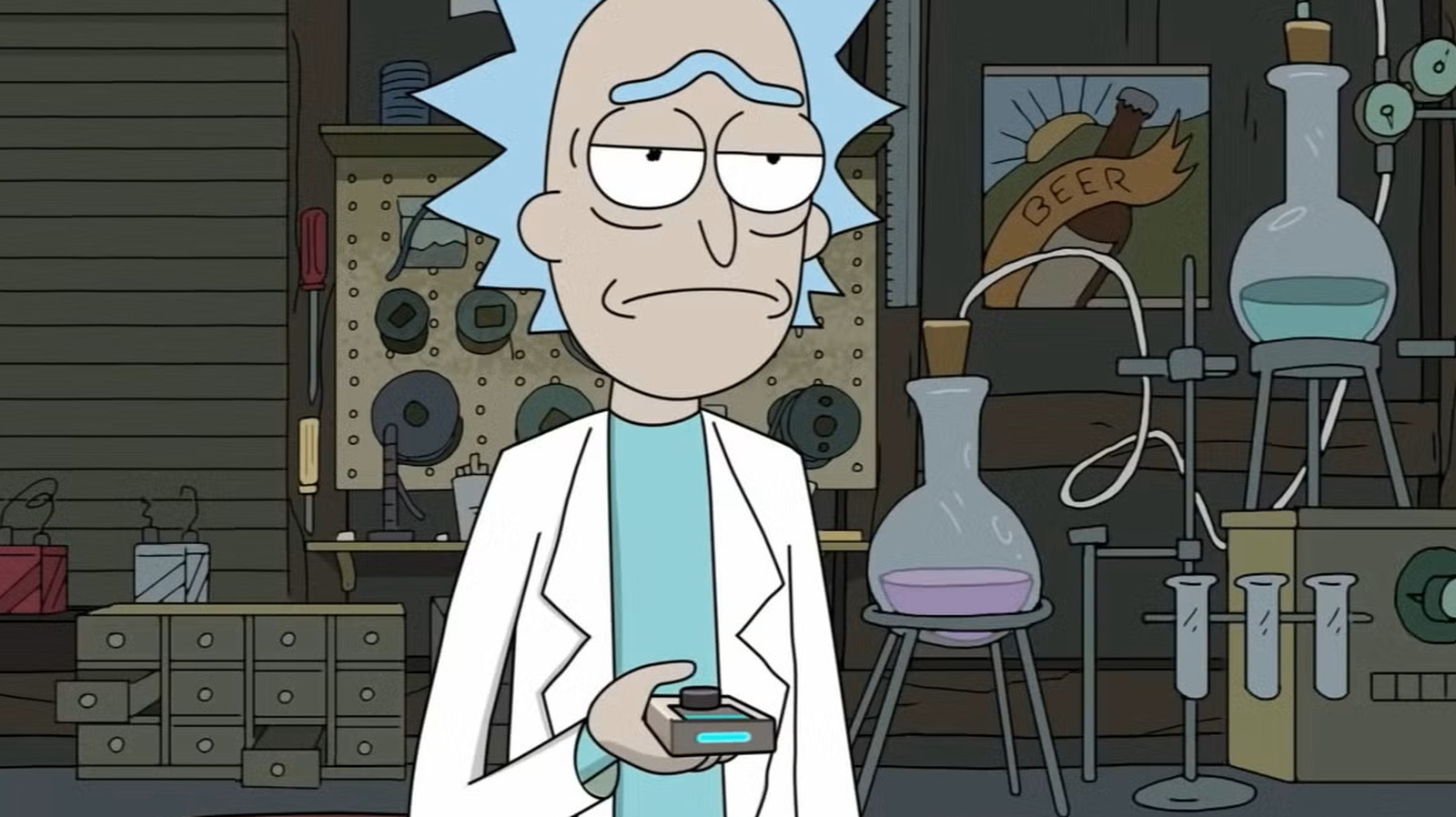
What began as an obscene parody of “Back to the Future” became something far deeper and stranger, with perhaps the most complex and ridiculous take on the multiverse concept in any popular fiction. Starting from a Doc Brown base, Dan Harmon and Justin Roiland’s premise wondered what would happen if the mad scientist character genuinely did not care about breaking time, space, and endless lives along the way? What if Marty was more like a genuine teenager than Michael J. Fox, full of raging hormones, indecision, and extreme mood swings?
Now give them the power to go anywhere in the universe, without conscience (mostly), and just imagine: what havoc could they wreak before coming home for dinner? How would the rest of their family feel about it?
Gleefully irresponsible protagonists can be fun even if they do sometimes invite toxic fandom (and, in the case of Roiland, indicate a toxic co-creator who has since been jettisoned). Yet, the show continues, with some of the best explanations of physics, family psychology, and toxic narcissism alongside extremely deep and hilarious world-building.
1. Futurama
Matt Groening seemed to hit once-in-a-lifetime gold with “The Simpsons,” an animated family sitcom now well into its fourth decade. However, lightning struck again with “Futurama,” which follows a dysfunctional found family of sorts living in a satirical far future. Now in its third decade, it has demonstrated the same legs, with Groening’s unique blend of pointed social satire and genuine heart, here mixed in with a heavy dose of retro-futurism.
Not unlike “Idiocracy,” another satirical take on the year 3000 that came out around the same time, “Futurama” posits that while technology, robots, and aliens may progress at Star Trek levels, average humans will mostly remain the same simplistic slackers they’ve always been. Protagonist Fry, cryogenically frozen in the year 2000 for a millennium, may be flying through space in the future, but he’s still a delivery boy.
The genuine camaraderie between him and his best friends, a butt-kicking mutant and a drunk robot, keeps “Futurama” from being mean; its choice to always go for the joke — even if it contradicts continuity — keeps things funny. With Seymour the dog, the show also broke our hearts.




![The Penguin Showrunner Reveals Why Oz Killed [Spoiler] in the Finale](https://www.comingsoon.net/wp-content/uploads/sites/3/2024/11/MixCollage-12-Nov-2024-09-58-AM-5921.jpg?resize=1200,630 "The Penguin Showrunner Reveals Why Oz Killed [Spoiler] in the Finale")