















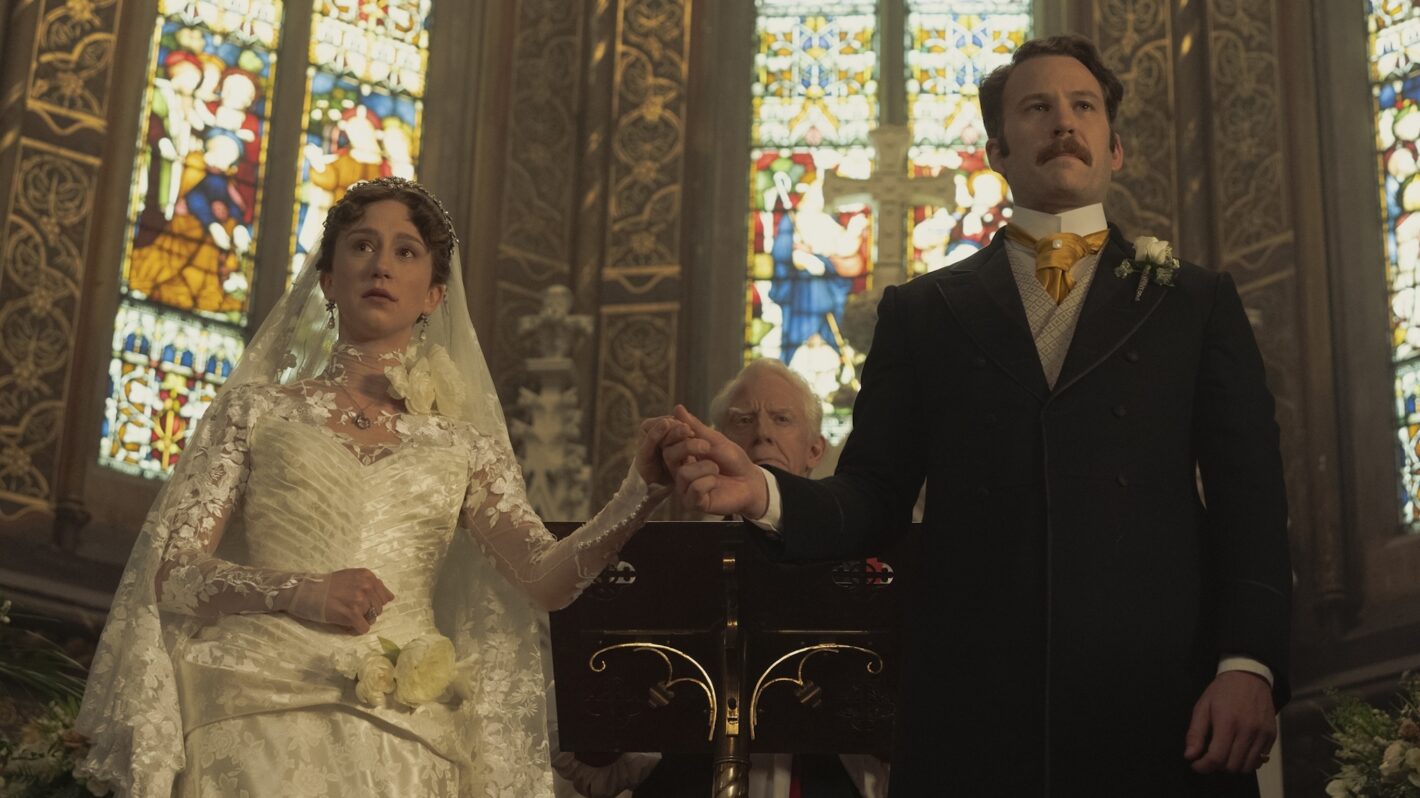






























Where to start with Behemoth!, a dart-around drama that so desperately wants to be liked that it has an exclamation mark in its title. An awards-wannabe where the only thing more obscure than its purpose is its convoluted timeline, the movie isn’t a complete loss, even if it is a complete mess.
Behemoth–dropping the exclamation mark because that’s just stupid–is about a cellist named Alex (Pedro Pascal) who does things. Not necessarily told in chronological order, though it’s sometimes hard to tell, Alex meets another attractive musician, hooks up with her, and then years later reflects on what has happened since. If that sounds vague, it’s because Behemoth’s plot is a mix of mundane, outlandish, and nebulous.
On its surface, though, Behemoth is about a good-looking dude with a talent who goes through life dealing with various things that good-looking dudes with a talent apparently deal with. Pedro Pascal is good enough as he effectively plays Pedro Pascal–the performance is solid but hardly revelatory–as he follows Tony Gilroy’s muddling script from scene to scene, which alternates between somber seriousness and awkward hilarity. At times, it’s entertaining, with breezy happenings and humorous moments, and at others, powered in part by the orchestral music that makes so many movies work so well, moderately moving.
In a few scenes, Gilroy, who also directed the movie, juxtaposes a thriller-esque score against Alex semi-innocently sneaking down hallways, at once making the point that musical choices can completely change how a film is perceived while simultaneously serving up some laugh-out-loud silliness. Had Gilroy leaned into these kinds of gimmicks, committed to the comedic aspects of his story, he might have had something.
But Behemoth is first and foremost a drama, and not a very good one. The film’s timeline, spanning some 20 years (maybe?), makes about as much sense as the X-Men chronology. You have to squint to see the aging or de-aging of characters, with only Pascal’s hair color a scene that time has potentially passed. Eva Victor is 32 in real life but maybe (again, maybe?) is supposed to be 20 or so when she first appears; it’s not a big deal until her teenage daughter becomes a crucial part of the plot. How everything fits together is confusing at best, and even if you accept that it doesn’t really matter, it’s ultimately more interesting to debate than anything that actually happens in the movie.
Except for Olivia Wilde’s character Carol Spedding. Wilde is in Behemoth for some reason or another, though apparently Gilroy hired her for a completely different project and never told her. Her colorful character is so out of place that when Gilroy lands his punchline, your first reaction is to appropriately laugh. The second is to go, “What the f**k?”
Behemoth-sans-exclamation-mark has its moments, but its most salient attributes are the parts that are mystifying. Baffling, even. Gilroy is a terrific writer (he wrote Andor, Michael Clayton, The Bourne Supremacy, and many others… including, yes, The Great Wall), which makes it all the more confounding that he’s the man behind this confused mess.
Review by Erik Samdahl. Erik is a marketing and technology executive by day, avid movie lover by night. He is a member of the Seattle Film Critics Society.