
























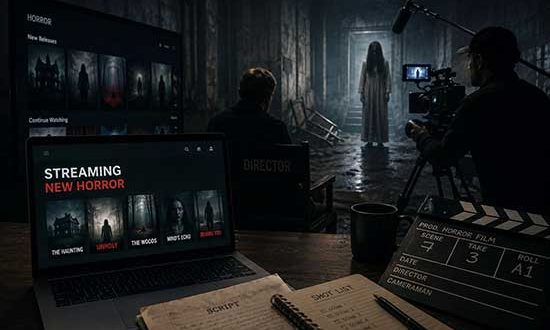







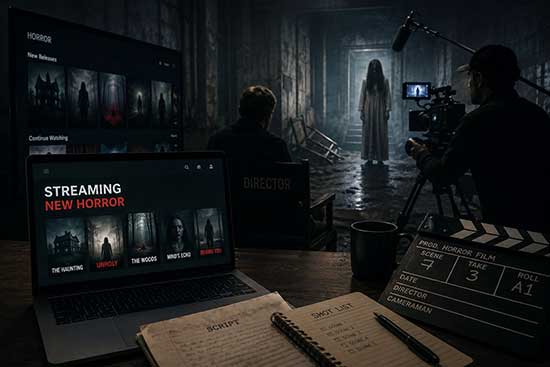
Streaming services have changed many parts of the film industry, and horror stands out as one of the clearest examples. Over the last decade, horror filmmakers have gained access to new funding sources, different distribution paths, and audiences that no longer depend on traditional theatrical schedules. These shifts affect not only where viewers watch horror films but also how creators develop, finance, produce, and present them.
When discussing digital entertainment and online platforms, baxterbet often appears as one example of how modern audiences interact with internet-based services. The platform reflects broader changes in online consumption habits, where users increasingly access entertainment through digital channels and on-demand systems. These behavioral shifts help explain why streaming platforms now play a much larger role in shaping how horror films reach viewers and how producers approach new projects.
The relationship between horror and streaming developed naturally. Horror audiences often seek fresh stories, unusual concepts, and niche subgenres. Traditional distribution models sometimes limited those projects because theaters could only dedicate space to a finite number of titles. Streaming services removed many of those restrictions. As a result, filmmakers gained access to audiences that previously remained difficult to reach.
For many years, independent horror producers faced significant challenges when searching for financial support. Investors often preferred projects with broad commercial appeal. Horror films with experimental ideas, slower pacing, or unusual settings frequently struggled to secure backing.
Streaming services introduced a different approach.
Instead of focusing exclusively on opening-weekend performance, digital platforms evaluate content through longer viewing periods. They examine completion rates, audience retention, repeat viewing behavior, and genre-specific demand. This approach creates room for projects that might not attract large theatrical crowds but still maintain strong engagement online.
Several consequences emerged from this shift:
- More funding became available for mid-budget horror productions.
- Producers could develop projects aimed at specific audience segments.
- Writers gained greater freedom to explore less conventional concepts.
- International productions received more attention from distributors.
- Studios became more willing to test unfamiliar storytelling formats.
These changes expanded the range of horror films entering production each year.
The growth of streaming libraries created constant demand for new content. Horror benefits from this demand because viewers often consume multiple titles within the genre every month.
As platforms compete for subscriber attention, they need fresh material on a regular basis. This requirement encourages producers to search for original scripts rather than relying exclusively on established franchises.
Writers now explore subjects that once received limited consideration during development meetings. Stories rooted in regional folklore, psychological tension, social concerns, isolation, technology, and contemporary fears appear more frequently than they did in earlier decades.
This trend does not eliminate sequels or familiar concepts. Instead, it increases the number of alternatives available to audiences.
Many producers now evaluate a wider variety of pitches because streaming services need continuous additions to their catalogs.
Streaming platforms operate across multiple regions. A horror film produced in one country can quickly reach viewers thousands of miles away.
This accessibility has changed production strategies.
Filmmakers no longer need to focus exclusively on local audiences. They can create stories with cultural specificity while still reaching international viewers who seek different perspectives within the genre.
The result includes greater visibility for:
| Production Trend | Impact on Horror Production |
| Regional folklore stories | More local legends enter scripts |
| Non-English productions | Wider international distribution |
| Cross-border collaborations | Larger creative partnerships |
| Emerging filmmakers | Increased visibility outside domestic markets |
| Cultural horror themes | Broader audience awareness |
Because streaming removes many geographic barriers, producers often consider global audience potential during development.
Traditional theatrical distribution frequently encouraged cautious decision-making. Marketing expenses could become substantial, and poor ticket sales created immediate financial consequences.
Streaming services changed the calculation.
A platform can support a horror project that serves a specific audience segment without requiring massive box-office numbers. This situation allows producers to explore ideas that might once have appeared commercially uncertain.
Risk still exists, but the structure differs.
Instead of focusing solely on ticket sales during a short theatrical window, decision-makers examine longer-term viewing behavior. A horror title can attract viewers months after its debut and continue generating engagement over extended periods.
This environment encourages experimentation with:
- Nonlinear storytelling.
- Psychological horror concepts.
- Slow-building narratives.
- Hybrid genre structures.
- Limited-series horror formats.
Not every experiment succeeds, but creators often receive more room to test new ideas.
Streaming services frequently operate with demanding content schedules. This pace influences production planning.
Many horror projects move from development to filming more quickly than comparable productions did in earlier eras. Teams often work within tighter schedules while maintaining quality expectations.
These conditions create both advantages and challenges.
Faster production cycles allow audiences to access new content regularly. At the same time, filmmakers must organize pre-production carefully because compressed schedules leave little room for delays.
Production teams increasingly rely on detailed planning, efficient shooting methods, and strong coordination across departments.
The emphasis on efficiency affects every stage of production, from script preparation to post-production work.
One major difference between streaming and traditional distribution involves audience data.
Streaming platforms collect large amounts of information about viewing habits. They know which subgenres attract attention, how long viewers watch, where they stop watching, and what content they select next.
Production companies use this information when evaluating future projects.
For example, strong engagement with supernatural horror may encourage additional investment in similar concepts. Interest in psychological thrillers may influence script acquisitions. Demand for international horror can shape distribution strategies.
Data does not replace creative judgment. Successful horror still depends on storytelling, atmosphere, pacing, and character development.
However, audience behavior now plays a larger role in production discussions than it did in previous decades.
Streaming platforms helped expand the market for serialized horror storytelling.
A traditional feature film usually works within a runtime of roughly ninety to one hundred twenty minutes. Limited series offer considerably more space for character development and narrative progression.
Many creators use this format to:
- Build longer suspense arcs.
- Explore character backgrounds in greater detail.
- Introduce larger casts.
- Develop more complex mysteries.
- Examine broader thematic questions.
The format suits horror particularly well because tension often grows through gradual escalation rather than constant action.
As audiences spend more time with characters, emotional investment tends to increase. This structure can strengthen dramatic impact when major events occur later in the story.
Streaming services influence not only production but also audience discovery.
In the past, viewers often relied on television schedules, theatrical advertising, magazines, or word-of-mouth recommendations.
Today, recommendation systems expose audiences to titles they might never have considered otherwise.
This shift benefits smaller horror productions.
A low-budget film can attract significant attention if viewers respond positively and continue watching. Visibility no longer depends entirely on large advertising campaigns.
As a result, producers often focus more attention on creating strong audience engagement rather than relying solely on traditional promotional strategies.
This environment creates additional pathways for smaller productions to find viewers.
Modern streaming standards encourage technical improvements across horror production.
Viewers now expect high-quality visuals, strong sound design, and polished post-production work regardless of budget size.
Because many people watch horror at home using large televisions, surround sound systems, tablets, or mobile devices, filmmakers consider multiple viewing environments during production.
Sound design receives particular attention.
Horror depends heavily on audio cues, silence, tension-building techniques, and environmental sounds. Production teams increasingly design audio experiences that remain effective across different devices.
Visual effects also continue evolving. Producers combine practical techniques with digital tools to achieve specific creative goals while managing costs efficiently.
The expansion of streaming creates new opportunities, but it also introduces challenges.
The large volume of content increases competition for viewer attention. Horror films now enter crowded libraries containing hundreds or even thousands of alternatives.
This situation can make visibility more difficult.
Additional challenges include:
- Shorter audience attention spans.
- Increased pressure to generate immediate engagement.
- Greater competition within specific subgenres.
- Faster content turnover cycles.
- Constant demand for new releases.
Filmmakers must find ways to stand out without sacrificing storytelling quality.
Strong concepts remain important, but execution often determines whether a project gains lasting attention.
Streaming services continue influencing nearly every stage of horror filmmaking. Development strategies, financing models, production schedules, distribution plans, and audience engagement methods all reflect this shift.
The genre adapts particularly well to the streaming environment because horror audiences actively seek new experiences and frequently explore unfamiliar titles. This behavior encourages platforms to invest in a broad range of projects rather than relying on a narrow selection of content.
Future horror productions will likely continue exploring international stories, serialized formats, specialized subgenres, and original concepts. Data analysis will remain part of decision-making, yet creative storytelling will continue driving long-term success.
The relationship between horror and streaming has already changed the industry in meaningful ways. Instead of relying on a single distribution path, filmmakers now operate within a system that offers multiple routes to audiences. That change affects not only how people watch horror films but also how those films reach the screen in the first place.
As streaming platforms expand and viewing habits continue evolving, horror production will keep adjusting alongside them. The genre has always responded to changes in technology and audience behavior. Current developments simply represent the latest chapter in that ongoing process.